
What Sediment Actually Does
As water heats, dissolved minerals precipitate out and settle at the bottom of the tank. Over time this layer insulates the water from the heating element, forcing the unit to work harder and longer to reach the same temperature. Eventually it can cause popping or rumbling noises, reduced hot water capacity, and premature element failure.
How Often Is Actually Necessary Here
National guidance often suggests flushing every one to two years. For most West Palm Beach households, an annual flush is the safer default, and the water that comes out of the drain tells you whether to tighten that interval. Homes with a water softener already installed can sometimes stretch it slightly, since much of the mineral content is removed before it reaches the tank.
What A Flush Actually Involves
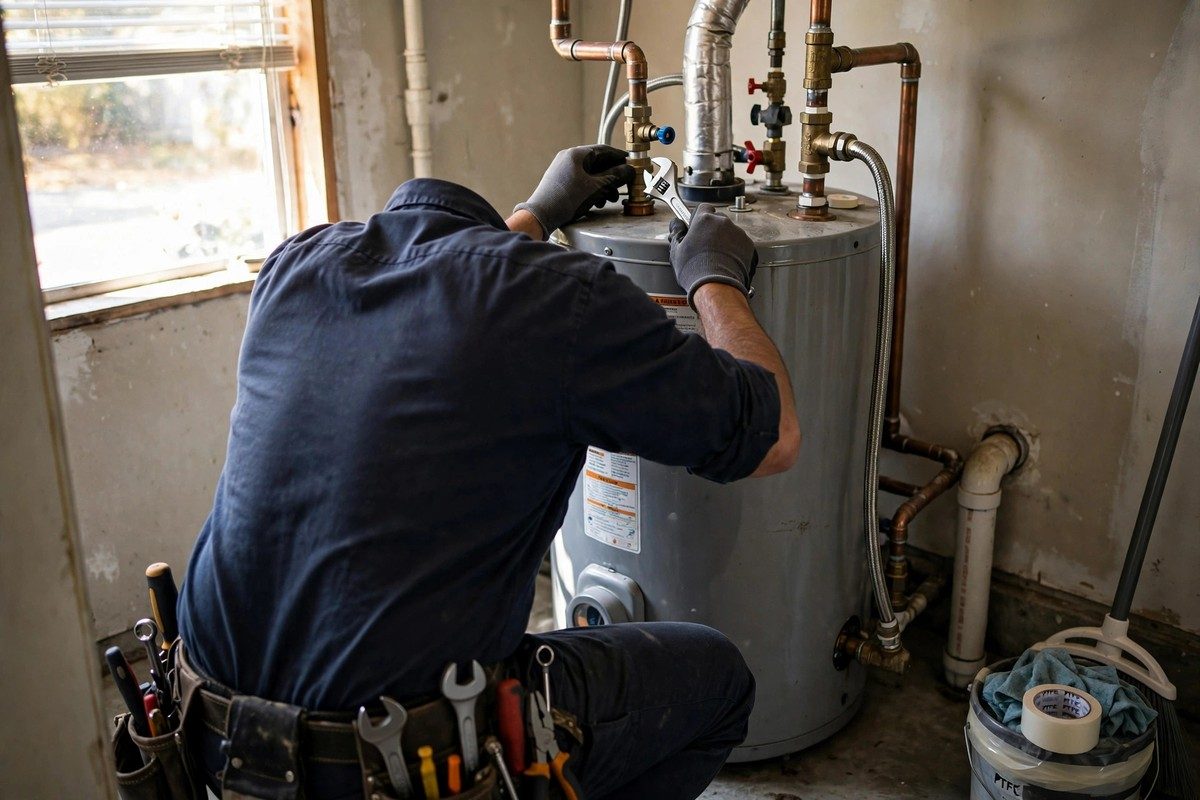
A technician shuts off the cold water supply and power or gas to the unit, connects a hose to the drain valve, and flushes the tank until the water runs clear of sediment. It's a routine, non-invasive service that typically takes under an hour.
Signs You've Already Waited Too Long
Rumbling or popping sounds during heating, a noticeable drop in how long your hot water lasts, or lukewarm water even with the thermostat turned up are all signs sediment buildup has already progressed. At that point a flush still helps, but a badly neglected tank may need a full descale or the sediment may have already caused element damage requiring repair.
What's In The Water Feeding Your Tank Here
The City of West Palm Beach draws its supply from Lake Mangonia and Clear Lake, which are fed by the Grassy Waters Preserve. The city's plant uses conventional filtration and lime softening, then ultraviolet and chloramine disinfection, before the water reaches your street.
The city also buys finished water from the Palm Beach County system through interconnections, so the water at your tap can differ from a neighbor's in another utility's territory. Lime softening reduces hardness, but dissolved minerals still settle out when water is heated and held in a tank for years, which is why sediment shows up either way.
Because the mineral load varies by address, let the flush set your interval. If a first flush pulls out heavy grit from a heater that is only a few years old, shorten the schedule. If the water runs clear, annual is still a safe default.
Tank Vs. Tankless Maintenance Differences
Tankless units don't collect sediment the same way, since there's no standing reservoir, but they do need periodic descaling of the heat exchanger for the same underlying reason, dissolved minerals. The maintenance looks different, but the annual cadence is largely the same.
What Happens If You Skip It For Several Years In A Row
A tank that's gone three, four, or more years without a flush often has a sediment layer thick enough that a standard flush struggles to clear it. That can call for a more involved descale. In the worst cases, it reveals that the heating element has already failed under the insulating layer. The gap between "a bit overdue" and "needs real intervention" is smaller than most homeowners expect.
How This Fits Into A Broader Home Maintenance Routine
Water heater flushing pairs naturally with other annual home maintenance tasks, checking smoke detectors, servicing HVAC, and similar seasonal routines. Attaching it to a date you already remember, like the start of hurricane season or a birthday, is a simple way to make sure it doesn't quietly slip by for another year.
What A Flush Visit Costs Compared To What It Saves
A standard annual flush is a modest, predictable cost compared to the alternative of replacing a water heater years ahead of schedule because sediment buildup was never addressed. Beyond the unit itself, an early failure often means an inconvenient no-hot-water period while a replacement is arranged, something a simple annual maintenance visit avoids almost entirely. Framed as ongoing appliance protection rather than an optional extra, the annual flush is one of the more cost-effective maintenance items in the entire house.
The Bottom Line
A water heater is one of the more expensive appliances in a home to replace. A maintenance step that takes under an hour and costs a fraction of early replacement can help it reach its rated life. The mineral content in this area's water supply isn't going away, and it doesn't pause because a homeowner is busy or the unit still seems to be working fine.
Treat an annual flush the way you'd treat an oil change: a routine task done on a schedule rather than only after something goes wrong. It is the simplest way to get the full rated lifespan out of the unit you already paid for, tank or tankless.
Not sure when your water heater was last flushed, or worried it's overdue? We can check and service it in one visit. This is one of the simplest, least expensive things you can do to protect a major home appliance, and we're happy to check it during any other visit too.
Frequently Asked
Some homeowners do, but a professional flush also includes a check of the anode rod and heating element condition, which catches problems a DIY flush wouldn't reveal.
If the issue is purely sediment-related, often yes. If a heating element or thermostat has already failed from the buildup, a flush alone won't fix that, but it's still worth doing as part of the repair.
Yes, though the procedure is different. Tankless descaling addresses the same underlying hard-water problem, just applied to a heat exchanger rather than a storage tank.
Persistent rumbling after a fresh flush, or hot water that still runs out faster than it used to, suggests the heating element itself may already be compromised and worth a closer look.
Once a year is a safe default for most homes here. Watch the drain water during the flush and shorten the interval if it comes out gritty.
Related Services
Annual flushing applies to tank units. If yours is tankless, tankless water heater service covers the equivalent descaling. If a unit is already showing signs of failure rather than needing routine care, water heater repair is the next step, and water softener installation reduces the mineral load going into the tank. We also serve homeowners in Lake Worth Beach and WellingtonNorth Palm BeachLantanaLake ParkThe Acreage.