
What To Check Before You Call
A few things you can check yourself first. Look for gray plastic pipe where it enters the water heater or under sinks, which is a sign of polybutylene. Check whether exposed pipe is dull gray, threaded, and magnetic, which is a sign of galvanized steel. Note whether you've had more than one unrelated leak in the past year or two. None of this requires opening a wall, and having the answer ready speeds up the actual inspection.
According to court records summarized by consumer-law firms, the failure record of polybutylene was serious enough that a national class action, Cox v. Shell Oil, produced a settlement approved in 1995 with an initial commitment of $950 million. The claims period for that settlement expired in 2009, so a homeowner today cannot count on it to cover a repipe.
Recognizing Polybutylene Pipe
Polybutylene is a gray plastic pipe, often visible where it enters the water heater or under sinks. It was widely used in residential construction for a period before manufacturers and builders moved away from it. The reason was a well-documented pattern of failure: brittleness that develops over time from reaction with water treatment chemicals, leading to sudden, sometimes catastrophic leaks.
Recognizing Galvanized Pipe
Galvanized steel pipe has a distinct dull gray, threaded appearance and is magnetic, unlike copper or plastic alternatives. Over decades, the zinc coating that gives it its name corrodes from the inside, gradually narrowing the interior diameter and eventually leading to rust-colored water, reduced pressure, and increasingly frequent pinhole leaks.
Why These Materials Fail In Clusters, Not Isolation
One of the more frustrating aspects of both materials is that failure tends to cluster: once one section starts failing, nearby sections made from the same batch or installed at the same time are often not far behind. This is why homeowners who patch one leak in galvanized or polybutylene pipe frequently find themselves patching another a few months later.
The Repair-Vs-Repipe Decision
For a single isolated leak, a direct repair makes sense. But once a pattern of repeat leaks emerges, the math shifts. Continuing to patch individual failures often costs more over a year or two than a single, planned repipe. A repipe replaces the aging material with modern PEX or copper and ends the pattern.
What A Repipe Actually Involves
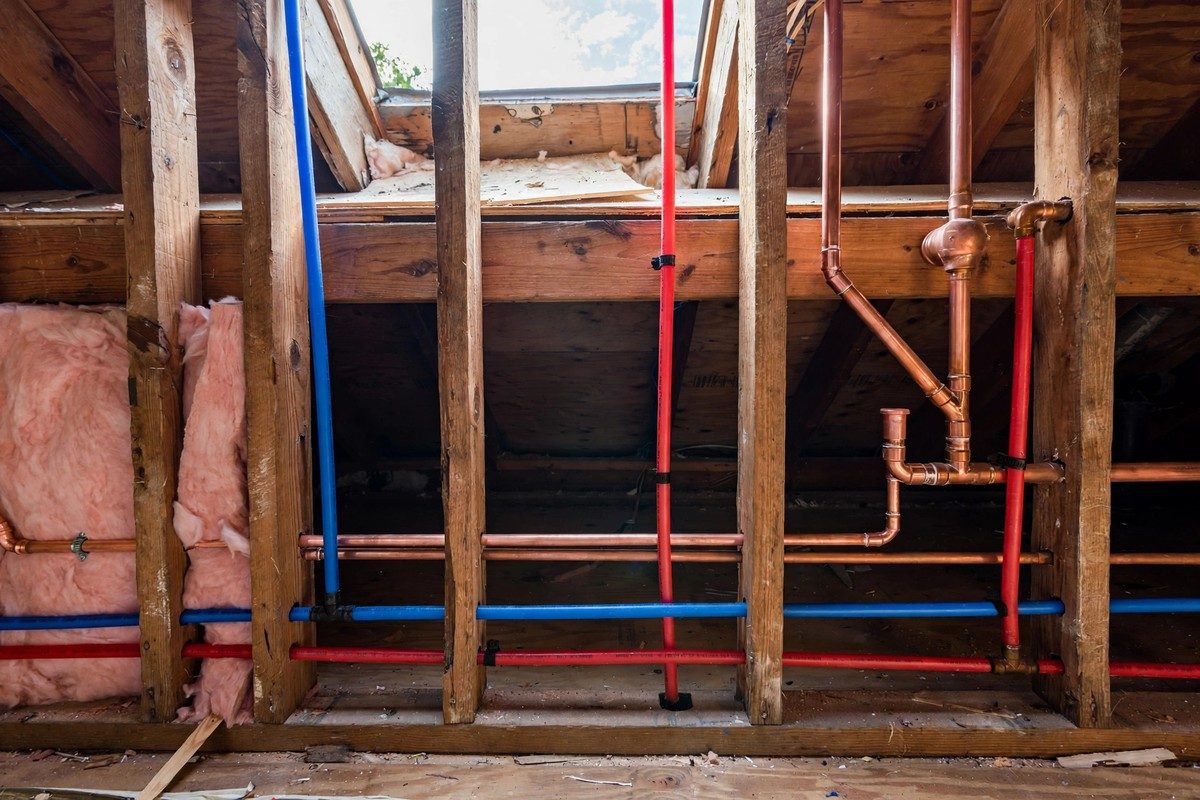
A full repipe is planned around minimizing disruption, mapping the most efficient access points (often through attic space or wall chases) rather than opening every wall in the house. Modern materials also come with the practical benefit of eliminating the specific failure modes that made the original materials problematic in the first place.
What Florida Insurers Look For In Older West Palm Beach Homes
Florida insurers commonly ask for a four-point inspection on older homes, often once a house reaches 25 to 30 years of age or more. The plumbing section records pipe material, age, and visible leaks. The findings that most often delay or limit coverage are polybutylene piping, heavily deteriorated galvanized pipe, plumbing older than roughly 50 to 60 years, and water heaters over 20 years old.
Polybutylene was widely installed from the late 1970s into the mid-1990s, so a West Palm Beach home built or renovated in that window may still have it. Galvanized steel is more likely in mid-century and older homes, and both materials tend to show up in clusters of repeat leaks.
If a four-point report flags either one, get a repipe quote from a licensed plumber before your renewal date so you have options. Replacing the pipe on your timeline is almost always easier than doing it under a coverage deadline.
A Note On Insurance And Polybutylene Specifically
Some homeowner's insurance carriers are aware of polybutylene's documented failure history and may factor it into underwriting or premiums for a property known to still have it. This is worth confirming with your insurer directly, since it can be a meaningful factor in the repair-versus-repipe decision beyond the plumbing considerations alone.
What To Expect Cost-Wise
A single-leak repair on either material is relatively inexpensive on its own. A full repipe is a larger investment. It's typically compared against the cumulative cost of repeat repairs. There is also the ongoing risk of a leak somewhere less convenient, such as inside a wall or above a finished ceiling, where it causes water damage on top of the plumbing repair itself.
Why Timing The Decision Matters
There's rarely an ideal moment to plan a repipe, it's disruptive by nature. That is exactly why many homeowners put it off until a leak forces the issue on an emergency timeline instead of a planned one. Scheduling a repipe proactively, once a pattern of failures has emerged, means you control the timeline, the contractor selection, and the scope, rather than making those decisions under pressure while water is actively damaging your home.
Some homeowners choose to pair a planned repipe with other renovation work already underway, since access points are already open and the incremental disruption is lower than doing it as a standalone project later.
The Bottom Line
Polybutylene and galvanized pipe were reasonable choices when they were installed. Both have since been proven to fail in predictable, well-documented ways. Pretending otherwise, or patching symptom after symptom, tends to cost more over time than addressing the underlying material. If your home is old enough that either material is a real possibility, having a professional confirm what you're actually working with is worth doing before the next leak forces the question, rather than after.
Quick Recap
If you have a home built before the 1990s, check for gray plastic pipe at the water heater connection and be alert to a pattern of repeat leaks in different spots. Either sign is worth a professional assessment before deciding between continued repairs and a full repipe. Homes built in the decades when either material was in common use are the ones most worth checking proactively, even without a current leak, simply to know what you're working with before it becomes urgent.
Not sure what kind of pipe is running through your home, or dealing with a second leak in the last year? We can assess what you're working with.
Frequently Asked
The gray plastic appearance is a strong indicator, but a professional inspection can confirm it, along with the condition of any galvanized sections.
That depends on how frequently leaks are occurring. Once it becomes a pattern rather than an isolated event, a repipe typically becomes the more cost-effective long-term option.
In some cases, yes. A phased approach is sometimes used to spread out cost, though a single continuous project is generally more efficient and less disruptive overall than multiple separate visits.
Most residential repipes are completed within a few days, depending on home size and access, with water service restored each evening during the project.
Often, yes. A four-point inspection records plumbing material and age, and polybutylene or heavily deteriorated galvanized pipe can delay or limit coverage on an older home. Confirm the specifics with your own insurer.
Related Services
Once either material is confirmed, a full repiping is the long-term fix, while an isolated failure on the service line specifically falls under water line repair. A professional leak detection visit is often what surfaces the pattern in the first place. We also serve homeowners in Lake Worth Beach and Greenacres.