
How To Tell Which System You Have
If you pay a sewer charge on your water utility bill, you're on municipal sewer. If you don't, and especially if your property is in a more rural or unincorporated part of the county, you're very likely on septic. A quick look at your property's utility records or a call to the county can confirm it definitively if you're unsure.
What A Septic System Actually Does
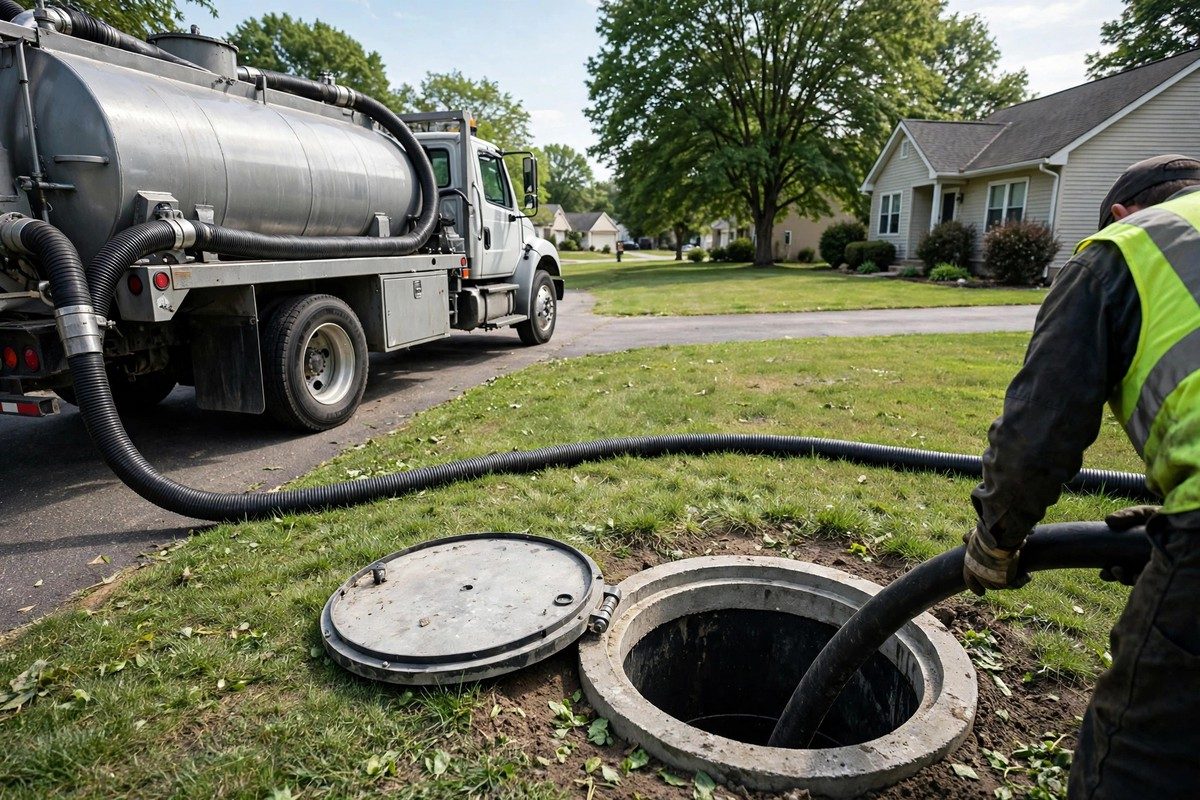
A septic system treats wastewater on-site rather than sending it to a municipal treatment facility. Solid waste settles in a tank, where bacteria break it down, while liquid effluent flows out into a drain field that filters it through the soil. It's a self-contained system, which means its maintenance is entirely the homeowner's responsibility.
Why Regular Pumping Matters
Most residential septic tanks need pumping every three to five years, depending on household size and usage. Skipping this isn't a minor oversight, an overdue tank risks backing up into the house or, worse, damaging the drain field. That is a far more expensive repair than routine pumping ever would have been.
Warning Signs Something's Wrong
Slow drains throughout the house (not just one fixture), a sewage odor near the yard, and standing water or unusually lush grass over the drain field are all warning signs. They point to a system that needs attention, either overdue pumping or, in more serious cases, drain field repair.
The Region's Water Table Adds A Wrinkle
This area's naturally high water table can affect drain field performance more than it would in drier soil conditions elsewhere. That is part of why septic systems here sometimes need more attentive monitoring than the standard maintenance interval alone would suggest.
What Not To Put Down The Drains On A Septic System
Grease, harsh chemicals, and non-biodegradable items are harder on a septic system than on municipal sewer, since there's no large-scale treatment facility processing what goes down your drains, just the bacteria in your own tank. Being mindful of this meaningfully extends how long the system performs well between pumpings.
Buying Or Selling A Home On Septic
A septic inspection is worth including as part of any real estate transaction involving a septic property, the same way a sewer camera inspection matters for a home on municipal sewer. The tank's condition and pumping history aren't always obvious from a standard home inspection alone.
Signs A Drain Field May Be Failing Rather Than Just A Full Tank
A full tank and a failing drain field can look similar at first (slow drains, odors) but they're different problems with different fixes. Pumping resolves a full tank quickly. A failing drain field, often caused by soil compaction, root intrusion, or age, may need a more involved repair or, in serious cases, partial replacement. An inspection that checks both distinguishes between the two before you pay for a pumping service that won't actually solve a drain field problem.
Keeping A Simple Septic Record
The U.S. EPA's homeowner guidance suggests having a septic system inspected at least every three years and pumped every three to five years, depending on tank size and household use. Keep a folder with the date of every pumping, the tank size and location if you know them, and any repair invoices.
A tank with a documented history is easier to evaluate than one with none, and the record helps whoever owns the property next. Mark the tank lid and drain field on a simple sketch too. Heavy vehicles, new patios, and tree plantings over the drain field are common causes of avoidable damage.
The Bottom Line
Most homeowners don't think about whether they're on septic or municipal sewer until a problem forces the question. Knowing which system you have, and staying ahead of its maintenance needs, is the difference between a routine service call and an expensive emergency. Septic systems in particular reward proactive maintenance precisely because they're entirely the homeowner's responsibility with no municipal backstop. This region's high water table makes staying ahead of drain field issues especially worthwhile rather than waiting for obvious symptoms to appear.
If you've recently moved into a property and aren't certain which system it has, confirm it in your first few weeks rather than waiting for a slow drain to raise the question. The answer changes both your maintenance responsibilities and who you'd call for a future issue.
Quick Recap
Know whether you're on septic or sewer, keep pumping on a three-to-five-year schedule if you're on septic, and treat slow drains throughout the house or yard odors as a reason to schedule an inspection rather than wait it out.
Not sure when your septic tank was last pumped, or noticing slow drains throughout the house? We can inspect and service it.
Frequently Asked
In some cases, yes, though it typically requires a permitted connection project and isn't something most homeowners take on without a specific reason to switch.
A thorough inspection should check both. A tank that's simply full looks different, and requires a different fix, than a drain field that's actually failing.
If you don't have records from a previous owner or service provider, we can assess the tank's current condition during an inspection. That gives a reasonable indication of whether it's overdue, and we can also help you start a simple maintenance log going forward so this isn't a mystery again in a few years.
Generally no special preparation is needed, though making sure the tank's access lid or cleanout is reachable, not blocked by landscaping or parked vehicles, helps the appointment go faster.
Most homes in the more developed parts of West Palm Beach connect to municipal sewer, but some older and unincorporated pockets of Palm Beach County still rely on septic. If you pay a sewer charge on your utility bill, you're on sewer.
Related Services
Slow drains inside the house are not always a septic issue, and drain cleaning rules that out separately from the tank itself. If backed-up sewage has already reached the point of overwhelming a municipal connection instead, that falls under sewer line repair. We also serve homeowners in Royal Palm Beach and WellingtonNorth Palm BeachLantanaLake ParkThe Acreage.