
How The Two Actually Differ
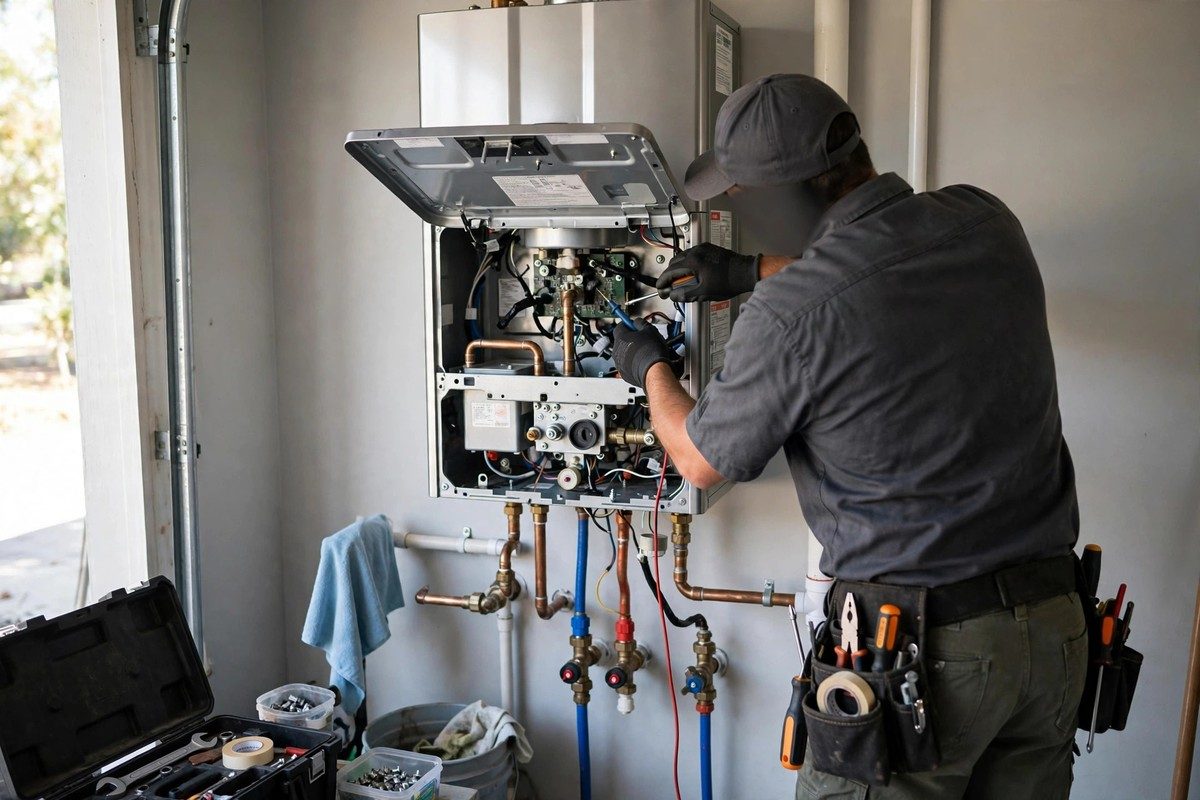
A traditional tank water heater stores and continuously reheats a set volume of water, typically 40 to 50 gallons for a household unit. A tankless unit heats water on demand as it flows through, with no storage tank at all. That means an effectively unlimited hot water supply as long as the unit's flow rate isn't exceeded by simultaneous use.
Both types must meet the federal minimum efficiency standards set by the U.S. Department of Energy, and the yellow EnergyGuide label on a new unit shows its estimated annual operating cost. Compare that label across the models you are quoted, since efficiency affects what you pay every month for the life of the unit.
The Upfront Cost Reality
Tankless units cost more to purchase and install, sometimes requiring updated venting or gas line sizing to support their higher output. Tank units are cheaper upfront and simpler to install as a straight swap in most cases. This upfront difference is often the deciding factor for homeowners on a tighter renovation budget.
The Hard Water Factor Nobody Mentions Enough
Mineral scale affects both types, but differently. Tank units accumulate sediment at the bottom that insulates the heating element, which is why annual flushing matters. Tankless units are more sensitive to scale on their heat exchanger and need regular descaling, with less forgiveness if it's skipped.
Household Size And Usage Patterns Matter More Than People Think
A tankless unit shines in households with staggered hot water use throughout the day rather than several people showering back-to-back, since it never runs out, it just needs to keep up with simultaneous demand. A larger family with overlapping high-demand periods sometimes finds a properly sized tank unit, or two tankless units, better matches their actual usage.
Longevity And The Real Total Cost
Tankless units generally last longer than tank units when properly maintained, which can offset some of the higher upfront cost over the unit's lifespan. That longevity depends on actually keeping up with descaling, and skipping that maintenance narrows the advantage quickly.
What South Florida Changes About The Choice
Incoming water in South Florida is rarely cold, so a tankless unit usually has less temperature rise to deliver than it would in a northern state. That helps its efficiency, though it doesn't change the maintenance picture.
Hurricane season changes the math too. A tank holds roughly 40 to 50 gallons, which can serve as emergency water after a storm if the tank is intact and you shut off the supply first. A tankless unit has no reserve and still needs power for its controls and fan. If outages worry you, factor that in.
Many West Palm Beach homes on slabs put the heater in a garage or a small utility closet, so measure the space and the venting path before you decide. A gas tankless conversion can also need a larger gas line, which belongs in the quote up front.
Space Considerations Worth Factoring In
Tank units require dedicated floor space and, for larger households, a correspondingly larger tank footprint. Tankless units mount on a wall and take up a fraction of the space, which can matter in smaller utility closets or when converting a space for other use. This isn't usually the deciding factor, but it's a real practical difference worth knowing about.
Making The Decision Without Regret
The households happiest with their choice are usually the ones who honestly assessed their actual usage pattern rather than defaulting to whichever option sounded more modern or cost less upfront. A larger household with simultaneous high-demand periods, multiple showers running back to back, for instance, needs a system sized for that reality, whichever type it ends up being.
A Hybrid Option Worth Knowing About
For households torn between the two, installing two smaller tankless units serving different zones of the house, rather than one large central unit, is sometimes a practical middle ground. This can better match usage patterns in larger homes without the full upfront cost of over-sizing a single system. It does add installation complexity, so discuss it against your floor plan and hot water demand before committing.
The Bottom Line
There's no universally correct answer to tank versus tankless, only the answer that fits your household's usage, budget, and tolerance for maintenance. What matters most is going in with realistic expectations on both sides. A tank unit costs less upfront and holds a reserve, while a tankless unit costs more and saves space.
Quick Recap
Match the unit to your household's actual usage pattern rather than upfront cost alone, and commit to the annual maintenance either option needs. Get those two things right and either choice tends to work out well. If you're still unsure, describe your household to us and we'll size both options for you.
Tank Vs. Tankless At A Glance
| Factor | Tank | Tankless |
|---|---|---|
| Upfront cost | Lower | Higher |
| Hot water supply | Limited to tank size | Continuous, limited by flow rate |
| Mineral maintenance | Annual sediment flush | Annual descaling of heat exchanger |
| Space needed | Floor space for tank | Wall-mounted, minimal footprint |
| Typical lifespan with maintenance | 10-15 years | 15-20 years |
Weighing tank versus tankless for a replacement? We'll walk through the real trade-offs for your household before you decide.
Frequently Asked
Tankless units are generally more energy-efficient since they're not continuously reheating stored water, though the difference is smaller for households with high, consistent hot water demand throughout the day.
It depends on your home's existing gas line sizing and venting. In many cases it's a straightforward swap. In others, some additional work is needed to support the tankless unit's higher demand.
Both are reliable when properly maintained. Reliability issues in either type typically trace back to skipped maintenance, sediment in tanks or scale in tankless heat exchangers, rather than an inherent flaw in the technology itself.
It depends on household size and peak simultaneous usage. That is exactly why an in-person assessment matters more than a generic sizing chart found online, since two households of the same size can have very different peak demand depending on daily routines.
It depends on household size, available space, and how you feel about hurricane-season outages. A tank gives you a built-in water reserve, while a tankless unit saves space and delivers continuous hot water but needs power and regular descaling. We compare both against your actual usage before quoting.
Related Services
Whichever way you decide, tankless water heater service covers the descaling a tankless unit needs going forward. If repair rather than replacement turns out to be the right call, water heater repair is the more targeted page. We also serve homeowners in Boynton Beach and Palm Beach.